1 · Build the population
We assemble a simulated version of your town, city, campus, or hospital from ordinary data — who lives where, how people move, what services exist. Each person is a realistic individual, not an average.
 Matter Tech
Sign in
Matter Tech
Sign in
Population simulation, in plain terms
Social Systems Engine (SSE) is software that builds a working model of a real place — a town, a city, a campus, a hospital — and the people in it. Once you have that model, you can try a decision on the simulation first: run an evacuation, an outbreak, a policy change, or a rush of demand, and see how it's likely to play out before you commit to it in the real world.



What it is
Big decisions that involve a lot of people are hard to test in advance. You can't run a real evacuation twice to see which warning order clears a town faster, or expose a real city to an outbreak to compare responses. Social Systems Engine (SSE) lets you rehearse instead — it creates a realistic, simulated population and lets you watch how a plan plays out, as many times as you like, with no real-world cost.
It works because people are not random. Each simulated person has a few stable characteristics that stay the same, but show up differently depending on the situation — the same person behaves one way at home, another in a crowd, another in a crisis. Put thousands of them together in a model of a real place and realistic group patterns emerge on their own.
Try it
This is a real agent-based model running live. Each dot is an autonomous agent moving through a shared world; a behavior (here, a simple contagion) spreads through contact. The chart at the bottom tracks the population over time. Change the contact rate, recovery rate, or population size — or click to seed a new case.
Illustrative agent model for demonstration. Real Social Systems Engine (SSE) studies use domain data, validation, and review rather than this simplified contact rule.
Trait city model
This second model gives every simulated person four continuous characteristics. Blocks act like rooms in a city grid: people bounce off block edges, slip through openings, and exchange traits under rules you can change while the model runs.
This city model is exploratory and illustrative. It shows how multiple individual characteristics can move through structured space under explicit rules; it is not a calibrated social forecast.
How it works
No modelling background needed. You bring the question; Social Systems Engine (SSE) handles the simulation and hands back results you can act on.
We assemble a simulated version of your town, city, campus, or hospital from ordinary data — who lives where, how people move, what services exist. Each person is a realistic individual, not an average.
Set up the situations you care about — an evacuation order, an outbreak, a price change, a closure — and run them. Change one thing and run again to get a fair, side-by-side comparison.
You get decision reports, maps, and risk curves showing how each scenario played out and which choice did best — in plain language you can take straight into a meeting.
What it's for
The same simulation can stand in for very different situations — anywhere a decision depends on how a population of people will behave.
Plan wildfire, flood, or storm evacuations: where people go, where roads jam, and which warning order clears a town fastest.
Study public-health-style scenarios only after the core engine is fully validated and the domain layer is ready for release.
Explore how turnout, coalitions, and public opinion could shift under different scenarios across a population.
Stress-test pricing, supply, and demand: how a market, a rental portfolio, or a retail footprint responds when conditions change.
Model how students, staff, or visitors move through a campus or building, and test schedules, capacity, and layout changes.
See how a surge of patients could stress a hospital's beds, ICU, and staff — and compare plans for handling it. Scenario planning, not clinical advice.
Who it's for
You don't need to be a modeller. Social Systems Engine (SSE) is for decision-makers — city officials, emergency managers, health departments, school administrators, insurers, and businesses — who need to weigh options before committing real resources.
Results are conditional what-if scenarios meant to inform a decision, not predictions about any specific individual.
Social Systems Engine (SSE)
Social Systems Engine (SSE) applies simulation thinking to social systems. Social Systems Engine (SSE) begins with Population Behavior Simulation — a tool for studying how people, institutions, resources, rules, and interventions change over time.
One engine, one platform. The challenge of making decisions about populations under uncertainty, with limited resources, shows up almost everywhere — and that is exactly what Social Systems Engine (SSE) is built to help study.
Domain packs
The engine does not need to know whether an entity is a person, a deer, a crop field, or an agency team. Each is a canonical entity with requirements, behaviors, resource dependencies, and constraints. Swap the entity definitions and the same platform studies a forest as naturally as a neighborhood.
Vegetation as a resource stock, predator and prey behavior, wildfire interventions, and migration movement.
Fishery populations, pollution as resource degradation, protected areas, and institutional constraints.
Crop yield as a resource stock, weather as interventions, labor and equipment as service capacity.
People, households, services, and rules — testing interventions before they are committed.
Surveys, tracking records, territory maps, and monitoring data populate scenarios.
Support careful review for conservation, restoration, resilience, and resource decisions.
Social Systems Engine (SSE) simulation
Designed as a workbench for building scenarios, viewing layers, running studies, and reviewing results with care.
Social Systems Engine (SSE)
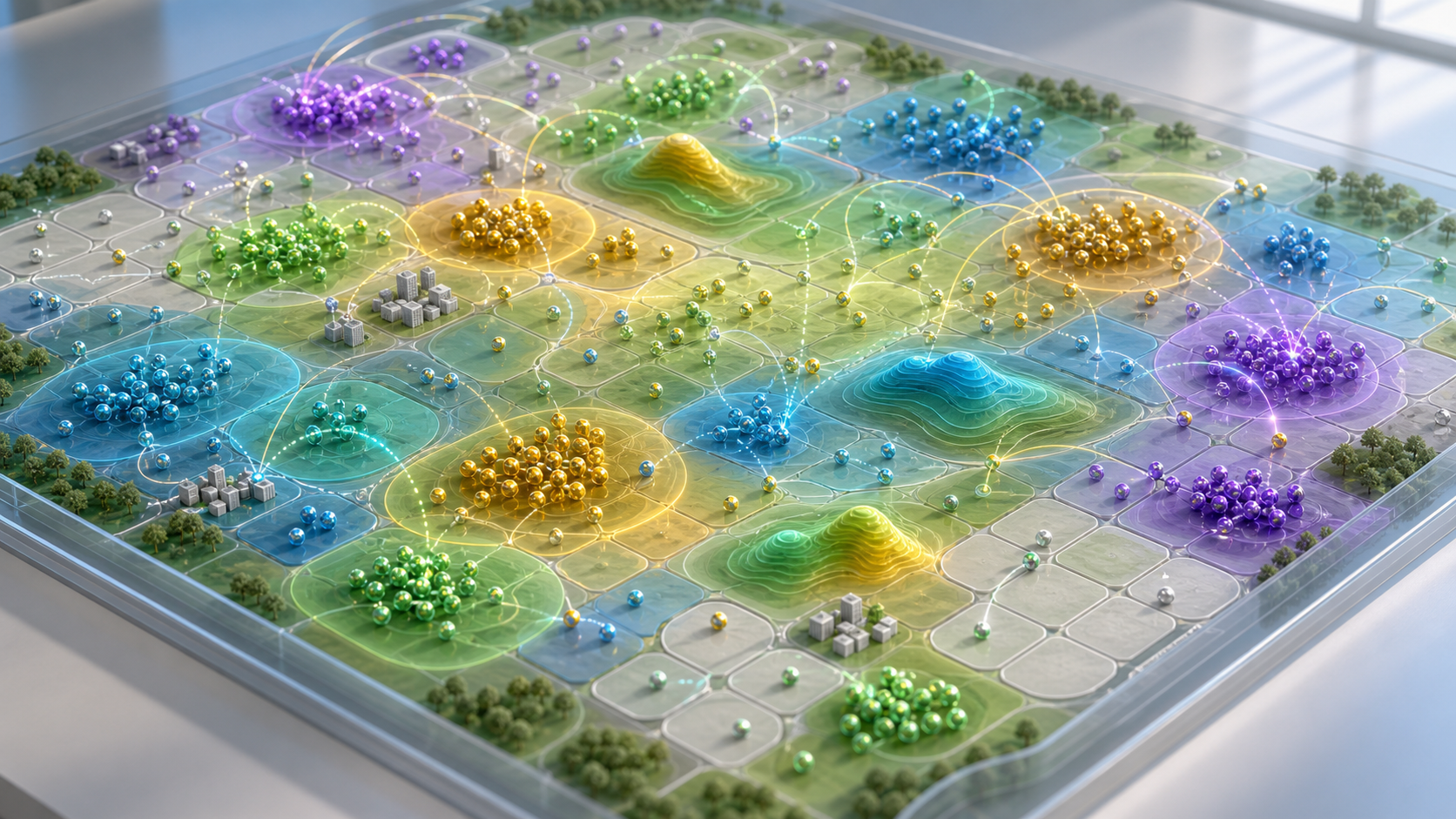
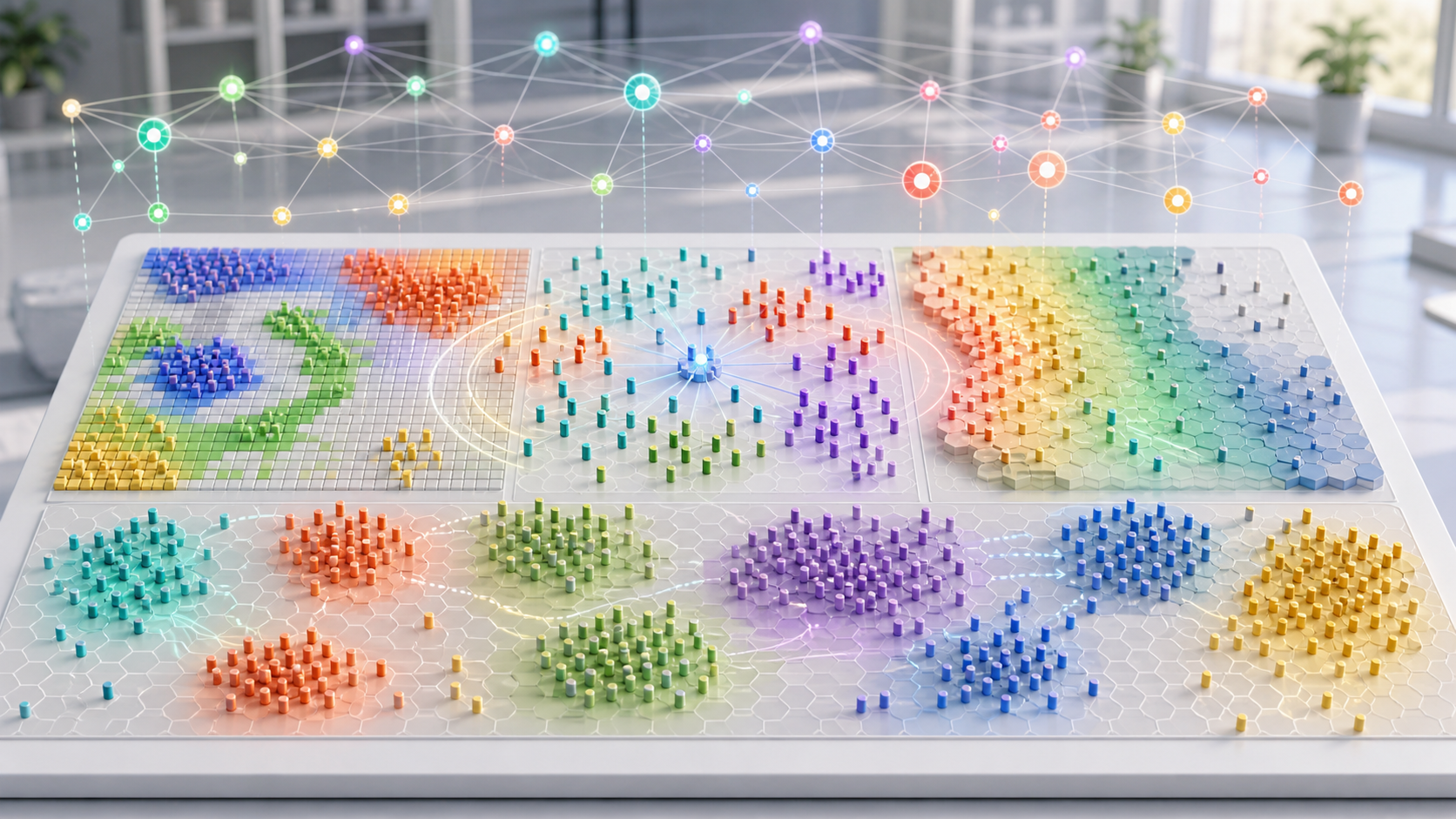
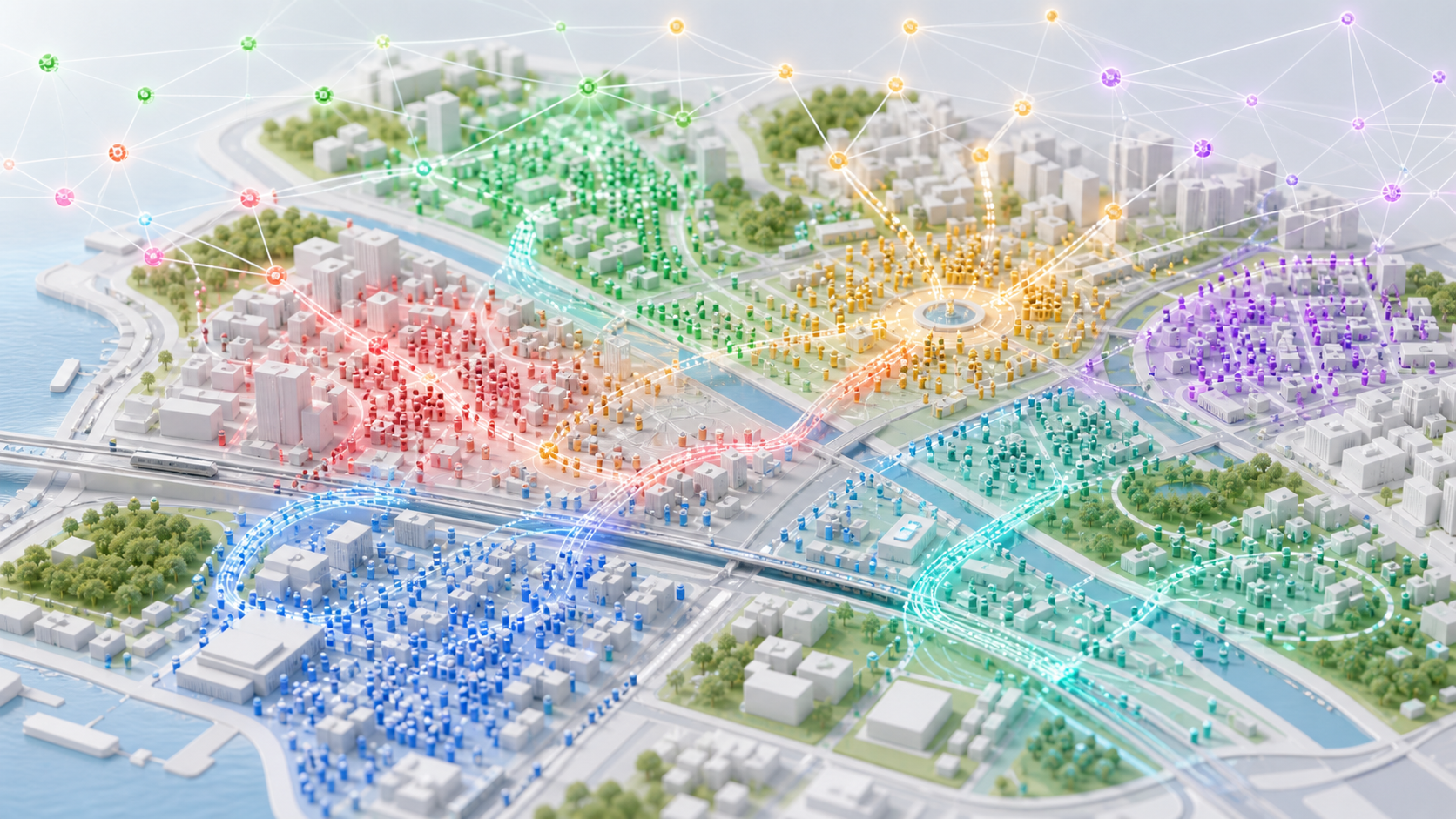
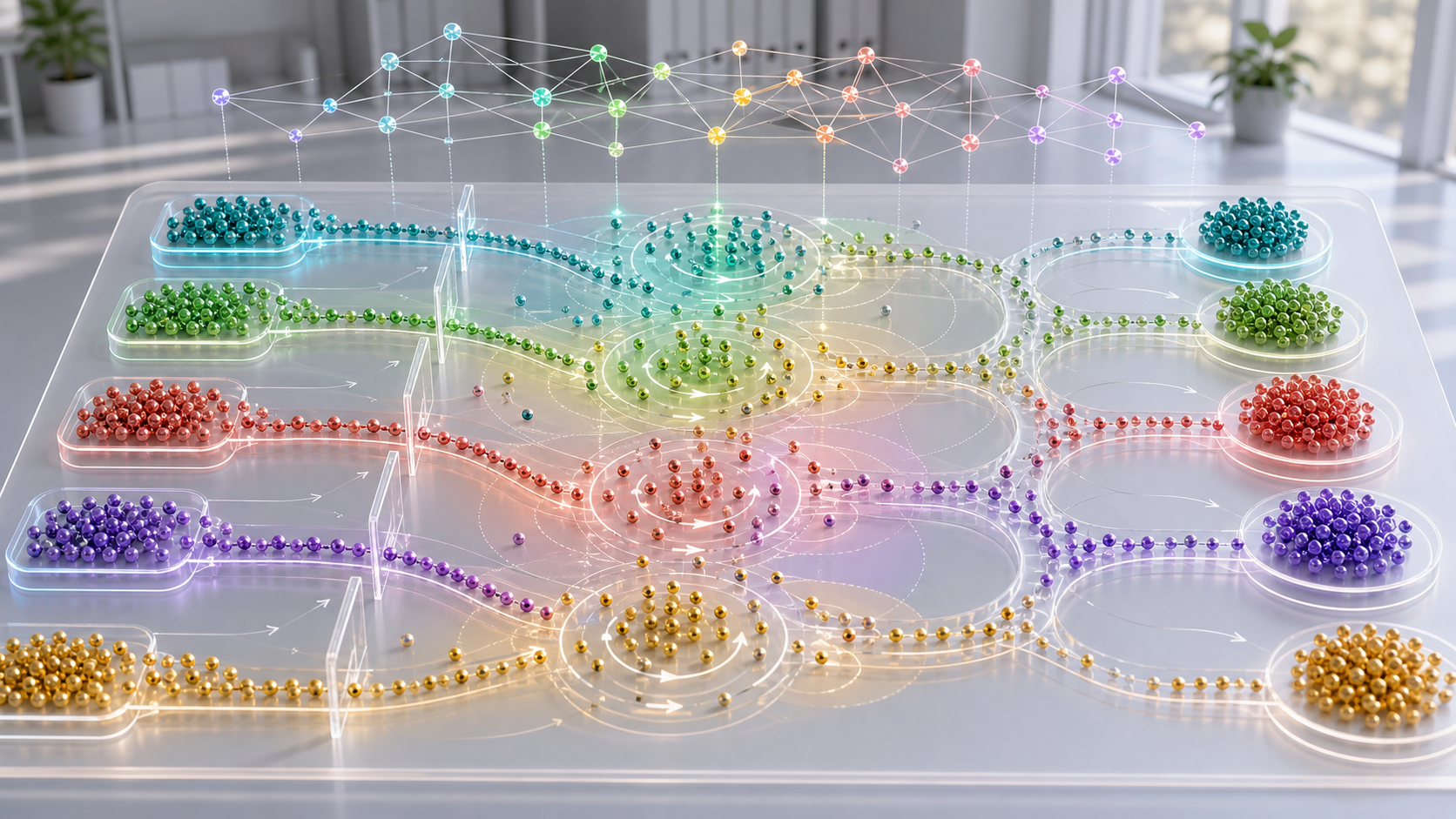
A rotating look at Social Systems Engine (SSE) population studies — agent networks, behavior and neighborhood diffusion, civic and cohort flows, and trusted coordination.



Access the tool
Run Population Behavior Simulation online, or choose a desktop edition when it becomes available for your platform.
Social Systems Engine (SSE) is rolling out through approved access. Desktop editions are in preparation — leave a note and we'll tell you when your platform is ready.
The science
Social Systems Engine (SSE)'s new formulation — the Dyadic Attraction–Repulsion Model — treats human social behaviour as an interest relation that splits into attraction and repulsion, settles into a social potential well, and separates a person's fixed characteristic from its context-dependent manifestation (whose group fixed point is culture). Below: plain-language explanations of the model and the engine that realizes it, each with the real equations and a live graph. Open any topic from the tabs in the page margins, or read them here.
Social Systems Engine (SSE) is an in-development research framework — these are its own definitions, not established results.
The full research foundation is set out in the Social Series — plain-language descriptions of the principle and how it extends to crisis, markets, elections, public health, and more.